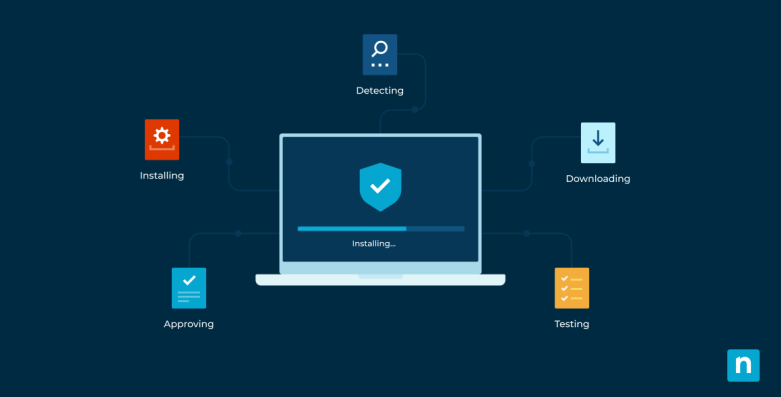
Have you ever experienced unexpected downtime due to an overlooked software update or a missed security patch? Manual patch management can be time-consuming and prone to errors, leading to vulnerabilities and operational disruptions. For businesses, mainly those reliant on complex IT infrastructures, unplanned downtime can result in significant productivity losses and increased security risks.
This is where you automate patch management offering a solution that reduces downtime and enhances overall IT efficiency. Let’s explore how automating patch management can transform your IT operations, ensuring systems are always up to date-, secure, and running smoothly.
1. Minimizing Downtime with Automated Scheduling
This allows IT teams to schedule updates during off-peak hours, minimizing disruptions to business operations. This scheduling ensures that patches are applied when the impact on users is minimal, reducing the likelihood of unexpected downtime during critical business hours.
- Scheduled Patch Deployment:
Automating patch deployment can schedule updates when system usage is low, such as overnight or during weekends. This approach helps avoid interruptions to daily operations, ensuring high productivity. - Reduced Human Error:
Manual patch management often leaves room for human error, such as forgetting to apply or misapplying a patch. Automation reduces these risks by ensuring that fixes are regularly and precisely applied across all systems.
2. Enhancing Security and Compliance
This is crucial for maintaining security and compliance within an organization. Regularly applying it is essential for protecting systems from vulnerabilities and ensuring compliance with industry regulations.
- Proactive Vulnerability Management:
Automation ensures that security patches are applied as soon as they are released, reducing the window of opportunity for cyberattacks. This proactive strategy considerably reduces the chance of breaches due to unpatched vulnerabilities. - Compliance Assurance:
Many industries have strict regulations regarding data security and system integrity. This helps organizations stay compliant by promptly applying all necessary patches, reducing the risk of penalties for non-compliance.
3. Improving IT Efficiency Through Automation
By automating patch management, IT staff may devote more time to strategic projects rather than regular updates. This shift enhances overall efficiency and allows for better resource allocation within the IT department.
It saves the time and effort necessary to maintain systems up to date, allowing IT workers to focus more on innovation and issue resolution. This efficiency leads to faster response times for critical issues and better overall system performance.
4. Centralized Patch Management for Consistency
One of the significant benefits is the ability to centralize the process, ensuring consistency across the entire IT infrastructure. Centralization allows for better control and visibility over the patching process, reducing the likelihood of inconsistencies that could lead to vulnerabilities or system failures.
- Unified Management Dashboard:
A centralized approach often includes a unified management dashboard where IT teams can monitor the status of all patches, ensuring that every device and application is up to date. This level of visibility is crucial for maintaining a secure and efficient IT environment. - Scalability:
As businesses grow, managing patches manually across an expanding network becomes increasingly challenging. It scales with the company, ensuring that as more devices and applications are added, they are seamlessly integrated into the patch management process.
Automate patch management is a game-changer for reducing downtime and boosting IT efficiency. Businesses can minimize disruptions, enhance security, and ensure compliance with industry standards by automating the scheduling, deployment, and monitoring of patches. For IT teams, this means more time to focus on strategic initiatives and less time spent on routine maintenance tasks. Adopting this is a wager on the reliability and security of your IT infrastructure, which will result in a more efficient and productive business.
