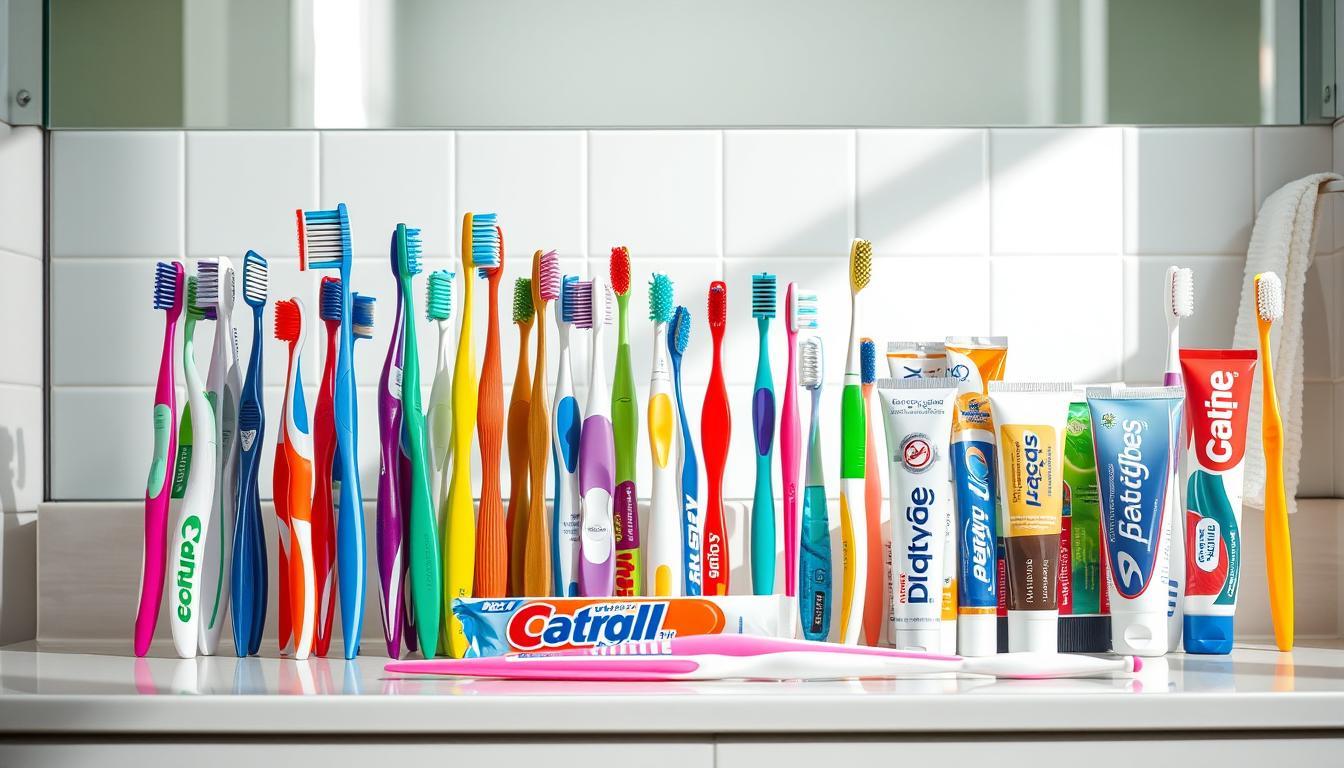
Are you tired of searching for the perfect oral hygiene products? With so many choices, picking the right toothbrush and toothpaste can be hard. But don’t worry, this guide will help you find the best tools for a healthy smile.
Key Takeaways
- Understand the differences between manual and electric toothbrushes to determine the best option for your needs.
- Learn about the importance of toothbrush bristle firmness and how it can impact your oral health.
- Discover the benefits of fluoride-containing toothpaste and how to choose the right formula for your dental concerns.
- Explore specialized toothpaste options for sensitive teeth, whitening, and gum health.
- Develop a personalized oral hygiene routine that will keep your teeth and gums in top condition.
So, are you ready to take control of your oral health and find the perfect toothbrush and toothpaste match? Let’s dive in and uncover the secrets to achieving a healthier, brighter smile.
Understanding the Differences: Manual vs. Electric Toothbrushes
Choosing between manual and electric toothbrushes is key for good oral hygiene. Each has its own benefits and drawbacks. Knowing the differences helps pick the best toothbrush for you.
Manual Toothbrushes: Pros and Cons
Manual toothbrushes are traditional and easy on the wallet. They’re great for travel since they don’t need charging. But, their cleaning power depends on how well you brush. Bad brushing can hurt your gums and miss some plaque and bacteria.
Electric Toothbrushes: Pros and Cons
Electric toothbrushes offer a better cleaning. They have timers and pressure sensors to guide you. This leads to better plaque removal and less gum inflammation. Yet, they cost more and need batteries or charging, which isn’t as travel-friendly.
Think about what you prefer, your brushing habits, and dental needs when choosing. Talking to your dentist can also guide you to the right toothbrush for a healthy smile.
For more on dental care and oral hygiene, check out the LivHealthy Dental blog. Our experts share the latest to help you keep your mouth healthy.
Selecting the Perfect Toothbrush for Your Needs
Choosing the right toothbrush is key to good oral hygiene. The size, shape, and handle design all matter. Each feature affects how well you brush your teeth.
Toothbrush Head Size and Shape
The head of your toothbrush should fit your mouth well. Dentists say a small, rounded head is best. It helps you reach every part of your mouth.
Toothbrush Handle Design
The handle’s design is important too. It should be easy to hold, especially if your hands are not steady. Look for a handle with an ergonomic design and a non-slip grip.
Soft Bristles for Gentle Cleaning
Soft bristles are best for cleaning your teeth. Dentists usually suggest soft-bristled toothbrushes, as they clean well without harming your teeth or gums. There are different bristle types for comfort and ease.
Finding the right toothbrush is crucial for your oral health. Think about the head size, handle design, and bristle texture. For more tips on keeping your smile healthy, check out the LivHealthy Dental blog.

| Feature | Recommendation |
| Toothbrush Head Size | Compact, rounded head for better access |
| Toothbrush Handle Design | Ergonomic design and non-slip grip for comfort |
| Bristle Texture | Soft bristles for gentle, effective cleaning |
How to Choose the Right Toothpaste for Your Needs
Finding the right toothpaste is key to a healthy, beautiful smile. With so many options, it’s important to know what to look for. This ensures you pick the best toothpaste for your oral health.
The most important thing in toothpaste is its fluoride content. Fluoride helps prevent cavities and strengthens teeth. Dentists say using a fluoride toothpaste is crucial for good dental care.
Think about your personal needs too. Do you have sensitive teeth? Do you prefer natural or organic ingredients? Or are you looking for teeth whitening? There are toothpastes made for these specific needs.
For sensitive teeth, look for toothpastes with potassium nitrate or stannous fluoride. These can help ease pain. For whitening, toothpastes with mild abrasives or hydrogen peroxide can remove stains and brighten your smile.
Always check for the American Dental Association (ADA) Seal of Acceptance. This seal means the toothpaste is safe and effective.
Regular dental checkups can also help you choose the right toothpaste. By considering your needs and choosing the right ingredients, you can keep your teeth healthy and your smile bright.
To learn more about oral hygiene, check out the LivHealthy Dental blog. It has dental resources and expert advice.

Conclusion
Choosing the right toothbrush and toothpaste is key to good oral hygiene. Think about manual vs. electric, bristle type, and toothbrush size. Also, consider your dental needs like sensitivity or whitening.
Don’t forget to change your toothbrush or head every three to four months. Your dentist at LivHealthy Dental can give you advice based on your oral health. With the right tools, your daily routine will keep your teeth and gums healthy and your smile bright.
For more tips on oral health, check out the LivHealthy Dental blog. It has articles and advice from our dental experts.
FAQ
What are the key factors to consider when choosing a toothbrush?
When picking a toothbrush, think about the head size and shape, and the handle design. The head should fit well in your mouth, letting you clean all areas. A compact, rounded head is best for cleaning.
The handle should be easy to hold and control, especially if you have limited dexterity. Soft-bristled toothbrushes are usually the best choice. They clean your teeth well without harming your enamel or gums.
What are the advantages and disadvantages of manual and electric toothbrushes?
Manual toothbrushes are cheaper, easy to use, and great for travel. But, they need good brushing technique to clean well and can harm gums if brushed too hard.
Electric toothbrushes clean better and more consistently, with features like timers and pressure sensors. But, they cost more, need charging, and take practice to use right.
What should I look for in a toothpaste?
The most important thing in toothpaste is fluoride. Fluoride helps prevent cavities and strengthens teeth. Dentists say to use a fluoride toothpaste.
Think about your needs, like if you have sensitive teeth or want whitening. There are toothpastes for sensitive teeth, tartar control, and whitening. But, be careful of harsh ingredients if you have sensitive teeth or gums.
How often should I replace my toothbrush or toothbrush head?
Replace your toothbrush or head every three to four months. Or sooner if the bristles get frayed or worn. This keeps your teeth clean and prevents bacteria buildup.
When should I consult my dentist for personalized recommendations?
Always talk to your dentist for advice on toothbrushes and toothpaste. They can suggest the best based on your dental health, like for sensitive teeth or gums.

